
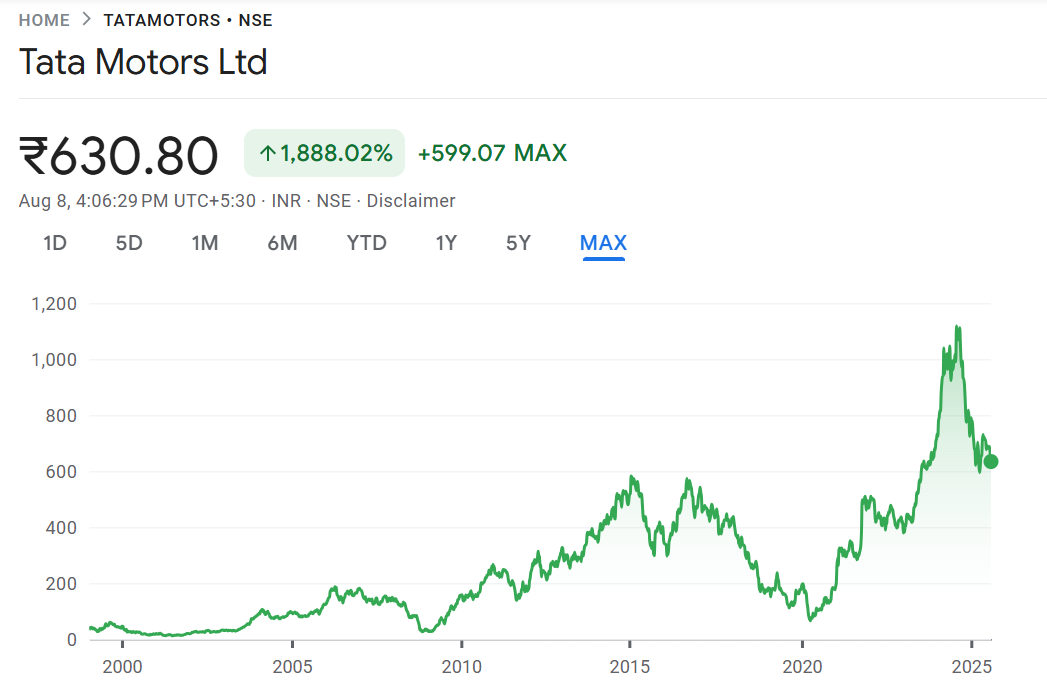
One thing that never seems to leave Tata motors is debt. Tata group has been famous for punching way above its weight, Whether it be the acquisition of Corus steel by Tata steel or the purchase of JLR by tata motors. The gigantic balance sheet of the tata group helps secure loans for such acquisitions. But does it produce return for the shareholders? Recent decision by the the company to Purchase Ivecko trucks through debt has bought it to lowest level in 2 years. The stock has fallen by as much as 43% from its record high, and year-to-date returns have been negative as of August 2025. This has contributed to a broader erosion in the market capitalization of the Tata Group. Could this be an opportunity to profit from a turnaround or will there be further drawdowns? To answer this question, we need to understand historic debt levels of the company and turnarounds.
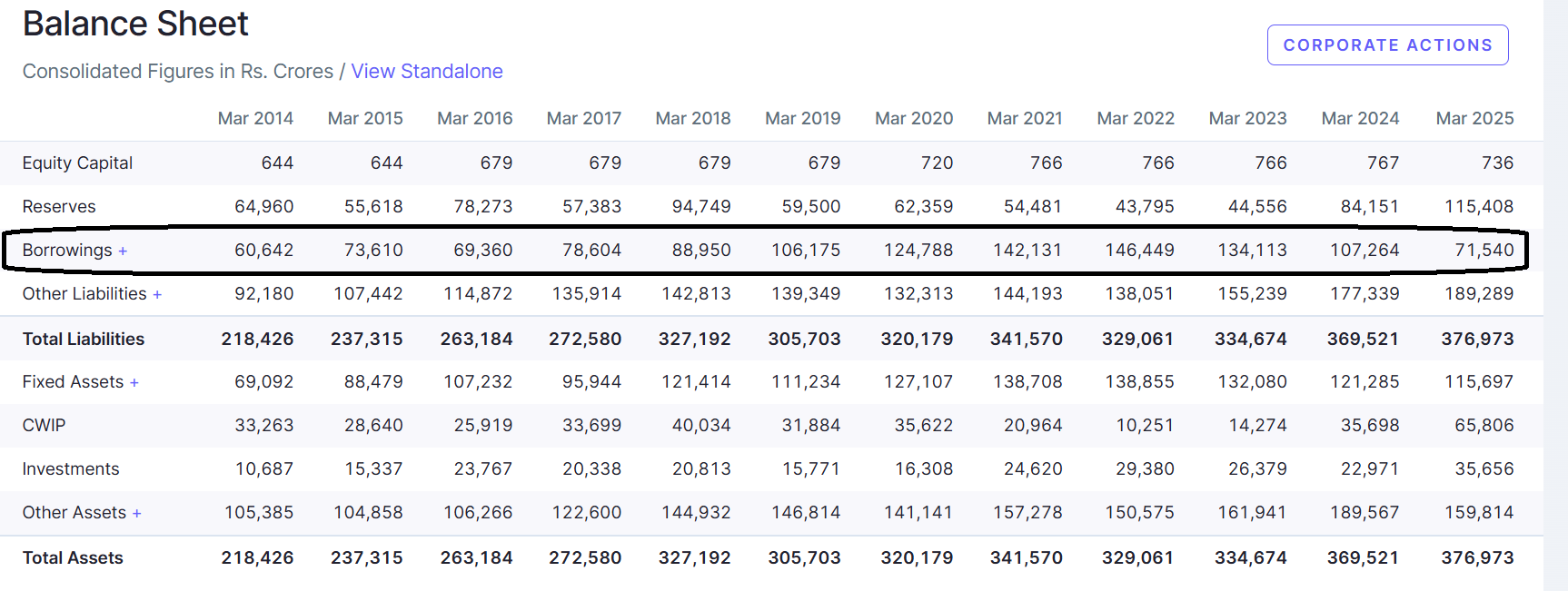
The company’s debt levels are a key concern matrix. Tata motors first major overseas acquisition was Daewoo Commercial Vehicle Company in 2004. In 2008, the company acquired ailing British iconic brand Jaguar Land Rover (JLR), this led to a significant increase in debt.
• Before the Acquisition (FY 2007-08): In the annual report for the year ending March 31, 2008, Tata Motors reported its total loans as ₹6,280.52 crore (approximately $1.5 billion at the time).
• After the Acquisition (FY 2008-09): The annual report for the year ending March 31, 2009, reflects the full impact of the JLR acquisition. The total loans on the company’s balance sheet had more than doubled, increasing to ₹13,165.56 crore (approximately $2.6 billion at the time).
This nearly 110% increase in debt was a direct consequence of the $3 billion bridge loan that Tata Motors secured to finance the acquisition and other associated costs. The company’s financial leverage significantly increased, which became a major challenge to manage, especially with the global financial crisis starting shortly after the deal closed. From 2008 to 2022 primarily due to the acquisition of Jaguar Land Rover (JLR) and the substantial investments required to integrate and turn around the business. This period also saw continued capital expenditure for new product development, global expansion, and the transition to electric vehicles (EVs).The consolidated total debt of Tata Motors peaked in the fiscal year ending March 31, 2022. At this point, the company’s total consolidated debt reached approximately ₹1,47,600 crore (or ₹1.476 Trillion).The COVID-19 pandemic and global supply chain disruptions during this period also impacted the company’s cash flows, contributing to the elevated debt.
Since then, the company made significant efforts to deleverage its balance sheet, and its debt levels have been consistently decreasing. In 3 years, the debt levels reduced by a considerable INR 1 lac crore. As of the fiscal year ending March 31, 2025, the total debt has been reduced to around ₹45,904 crore. This deleveraging gave boost to the stock price, with 3X return for the shareholders from 2022 to 2024. But in the last 8 months the stock has fallen by 35% from its peak.
A similar scenario of increased debt is expected from the recent announcement of Tata Motors’ acquisition of the Iveco Group. The all-cash deal, valued at $ 4.42 billion (approximately Rs 38,240 crore),Tata Motors has secured a $ 4.42 billion bridge loan from Morgan Stanley and MUFG to initially fund the acquisition. This loan will be repaid over 4 years. While the company has positioned this as a strategic move to create a global commercial vehicle (CV) manufacturing powerhouse and to provide a technological boost and expand its global footprint. However, a significant all-cash acquisition of this magnitude will undeniably increase the company’s debt burden, which is one of the downside risks for the company’s financial profile.
Another critical element to consider is the cyclical nature of commercial vehicle sales. The commercial vehicle market is highly sensitive to economic conditions, typically expanding during periods of strong economic growth and contracting during downturns. The global CV market saw a slowdown in 2024 but is projected to experience a modest uptick in 2025, with a 4.4% year-over-year growth in sales.
This deeply cyclical nature combined with recent acquisition makes the entry into the stock a significant factor for the investors as this tends to provide cyclical return’s also. This brings us to the valuations front. The entire company’s market cap is at INR 2.33L Crore with a PE of 9.7 currently. While the revenue for the company was at 4.34L crore and net profit at 28K crore. The book value(thinks plants, machinery, etc.) of the company is approx. INR 1.16L crore. So this gives us Price to Book value of 2X, whereas the P/B ratio had reached to 6X in 2024. This book value does not reflect the brand pull/value of Tata motors. If an investor feels that the company can leverage the recent Iveco purchase to boost the sales and profit to next orbit, then this is an excellent entry point for investors.
Disclaimer: Views mentioned are only for educational purposes. Please use your own discretion before any decision.